- About
- Visiting
- What’s On
- Venue hire
- Catalogues
- Collections
- 101 Treasures of Chetham’s
- Digital Resources
- The Flowers of Histories
- A Book of Hours from France
- The Manchester Scrapbook
- Thomas Barritt of Manchester
- Art Treasures Examiner of 1857
- Manchester Association for Constitutional Order
- The North Western Museum of Science and Industry: Some Reminiscences by Richard Hills
- Criminal Manchester
- The Cup of Destiny
- Athenaeum Souvenir
- Middle English Manuscripts
- Manchester and Liverpool of Today
- Hollingworth’s Mancuniensis
- Memoir of Cecil Wray
- William Seward’s Diary
- The Anti-Monopolist
- Fishwick’s History of Rochdale
- Knyvett’s Defence of this Realm
- Tractatus de Nigromantia
- Axon Ballads
- Printed Books & Ephemera
- Archives & Manuscripts
- Prints and Photographs
- Blog
- Support us
Births, Deaths, Marriages and Chickens: Strange Finds in the Margins
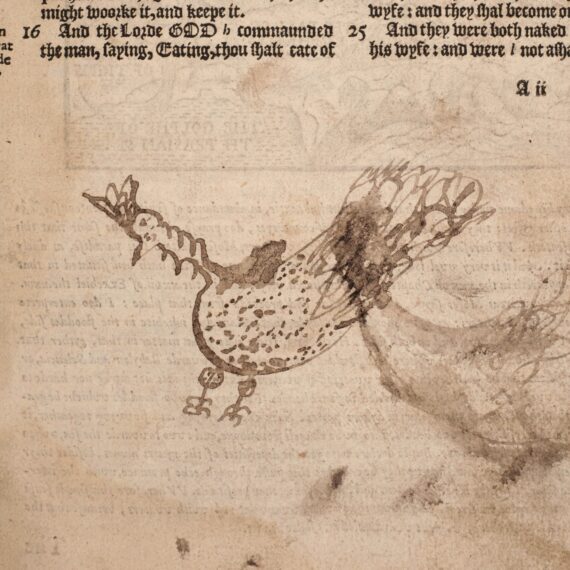
Readers’ marks are a common phenomenon in the books in Chetham’s Library: particularly in the early modern period between c. 1500 and c. 1700, readers frequently annotated their books, adding notes, comments and corrections to any available blank space. Such marks, also called marginalia, from the collections of Chetham’s Library have been the subject of several of our blog posts so far, including a recent blog post on the provenance of the library’s copy of Shakespeare’s Third Folio. In one of our Bibles, however, one reader left some particularly unusual traces: a flock of over twenty chickens of various shapes and sizes populates a blank page after the book of Genesis, with an additional ‘stray chicken’ also occurring several pages earlier (figures 1 and 2). Although drawings such as these do not show readers’ close engagement with the text of the Bible, they do provide a fascinating insight into the role of books in the lives of their past owners.
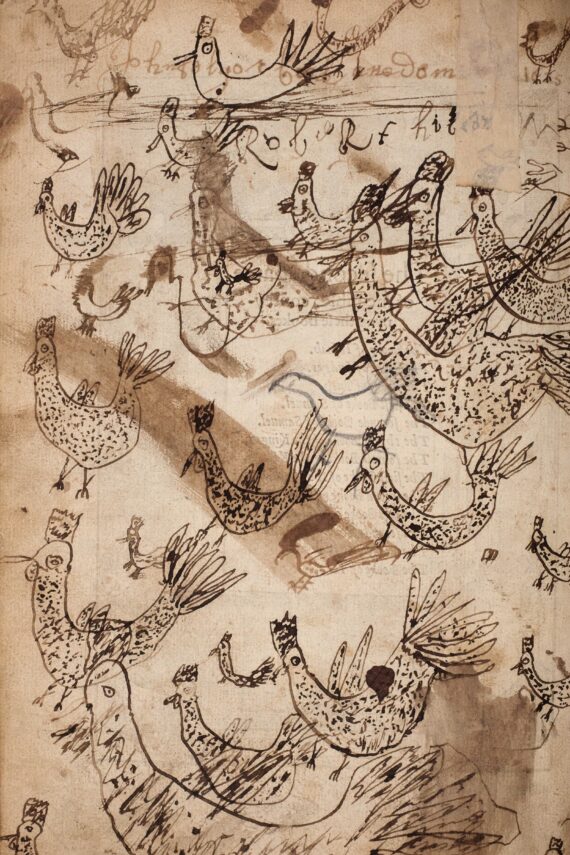
Figure 1: A flock of over twenty chickens (Chetham’s Library, Mun.7.B.3.18, sig. O1v).
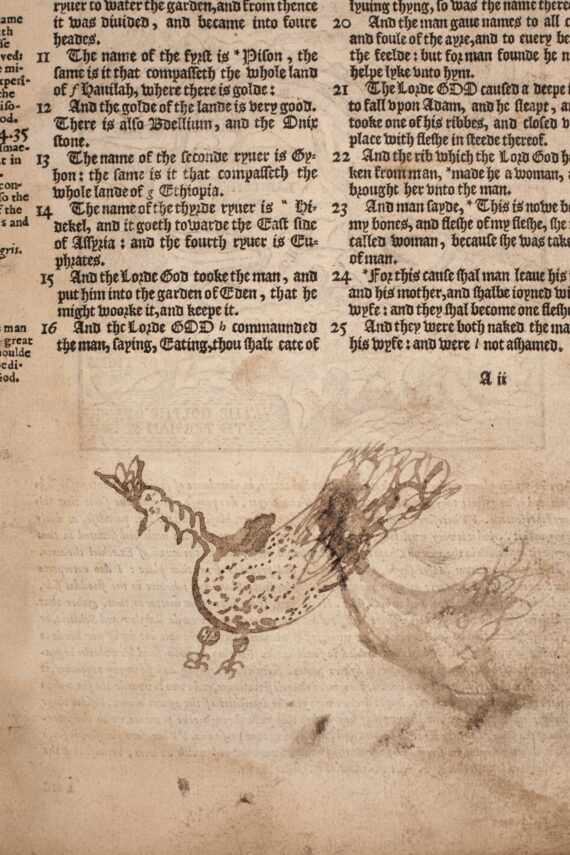
Figure 2: The ‘stray chicken’ (Chetham’s Library, Mun.7.B.3.18, sig. A2v).
The book that is home to the flock of chickens is a ‘Bishops’ Bible’, a version of the English Bible that was first printed in 1568. This was a revision of the ‘Great Bible’, which had been introduced under Henry VIII and Thomas Cromwell as the first English Bible whose provision was mandated in churches. The Bishops’ Bible was therefore the second authorised version of the English Bible. Its name is owed to the fact that work on this version of the Bible was undertaken by Archbishop Matthew Parker and other English bishops. It remained the official English Bible until the completion of the King James Version (which is still in use today) in 1611. This particular copy of the Bishops’ Bible was printed by Richard Jugge in London in 1577, and was donated to Chetham’s Library in the nineteenth century. It is now Chetham’s Library, Mun.B.3.18(1).
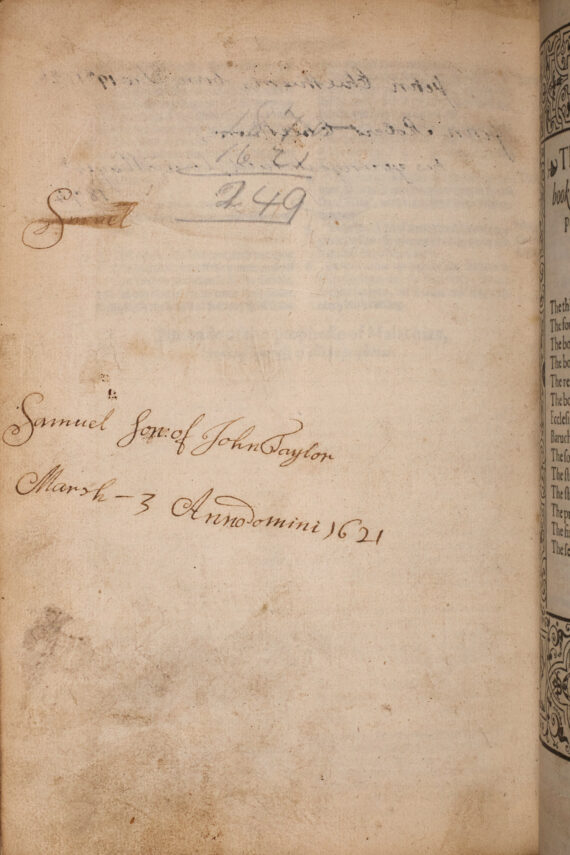
Figure 3: ‘Samuel son of John Taylor March 3 Anno Domini 1621’ (Chetham’s Library, Mun.7.B.3.18(1), fol. 412v).
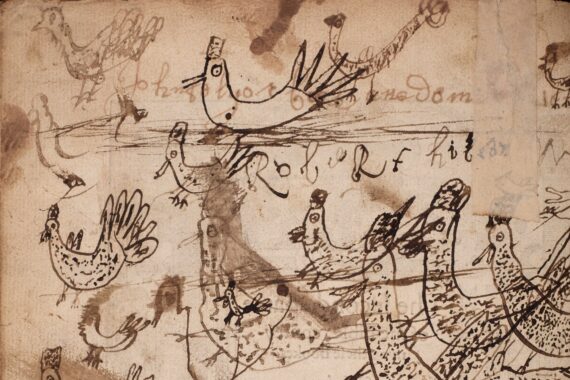
Figure 4: The signature of John Taylor, partly obscured by the drawings (Chetham’s Library, Mun.7.B.3.18(1), sig. O1v).
In addition to the drawings of chickens, there are some other readers’ inscriptions in this book. One of these may provide a clue to the identity of the artist who drew the chickens: on another blank page, a reader recorded the birth of a child: ‘Samuel son of John Taylor March 3 Anno Domini 1621’ (figure 3). Although John Taylor is a very common name, Samuel’s exact date of birth together with his father’s name makes it possible to find out where he most likely lived: the parish registers of Middleton, just north of Manchester, record the birth of a Samuel Taylor, son of John Taylor, on the correct date. Looking closely at the page with the chickens also reveals the signature of John Taylor (here spelled ‘Telyor’), partly obscured by the drawings (figure 4). Around four hundred years ago, therefore, this book was likely already owned by a family in North-West England. It appears to have stayed in the Taylor family for some time: elsewhere in the book, Samuel Taylor, by then around forty years old, made the notes ‘Samwill Taylor [his] book 1663’ and ‘Samwill Taylor [his] book god give him gra[ce] on ito [i.e. it to] looke that hee may run A hap pay [i.e. happy] race and heaven may be his dwelling place’, a relatively common type of ownership inscription found in many early modern books (figure 5).
![A blank page with a decorative printed border showing through from the previous page, on which the handwritten additions ‘Samwill taylor his book 1665’ and ‘Samwill taylor book god give him gra[ce] on ito looke that hee may run a hap pay race and heaven may be his dwelling place’.](https://static.chethams.com/app/uploads/sites/3/2026/02/Ellen-Births-Deaths-Marriages-and-Chickens-Figure-5-570x855.jpg)
Figure 5: Samuel Taylor’s note (Chetham’s Library, Mun.7.B.18(1), New Testament, sig. A1v).
The Taylors were not the only family during the seventeenth century to record family events in their Bible. Since paper was relatively scarce and expensive in the early modern period, blank pages in books were sometimes the most readily available writing surface. The increased accessibility of the Bible in English and the increased emphasis on the authority of the biblical text concomitant with the Protestant Reformation, along with the sinking costs of books enabled by the spread of printing with moveable type, meant that the number of families who owned a copy of the Bible was relatively high. In households that were not wealthy in particular, the family Bible may often have been the only book in the house, and a treasured possession. This meant that it was a good place to document milestones such as births, deaths and marriages, making many family Bibles from the sixteenth and seventeenth centuries a kind of family archive and reinforcing the ties between the family and their religion. There are several other examples of this practice in Chetham’s Library’s collections, one of them in a Bible printed in 1551 (Chetham’s Library, Mun.7.B.2.3) that was owned by the Boardman family of Eccles in the seventeenth century, in which they recorded the baptisms of their daughter Anna (figure 6). Another particularly elaborate example from the library’s collections is a hand-drawn record of births and deaths in the Burgiss family in a 1553 copy of the Great Bible, now Chetham’s Library, Z.6.5 (figure 7).
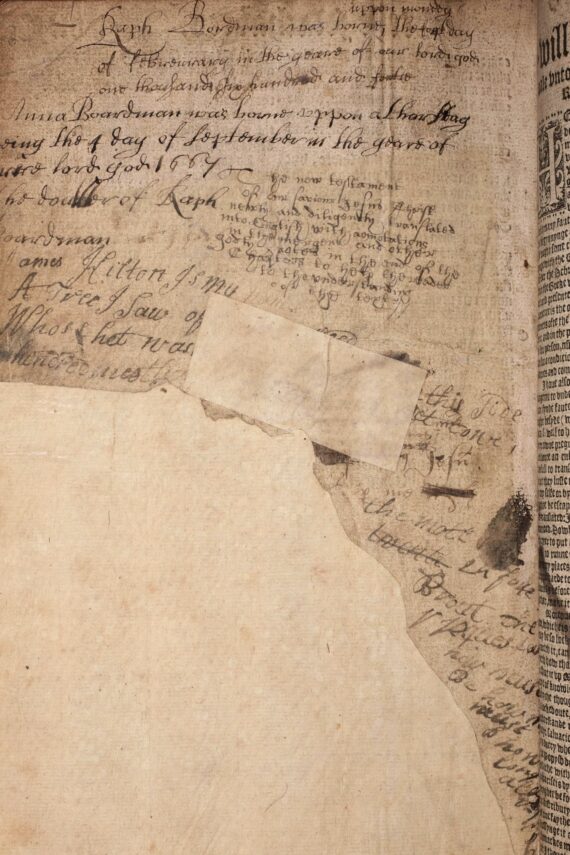
Figure 6: Records of Boardman family events (Chetham’s Library, Mun. 7.B.2.3, sig. NN6v).
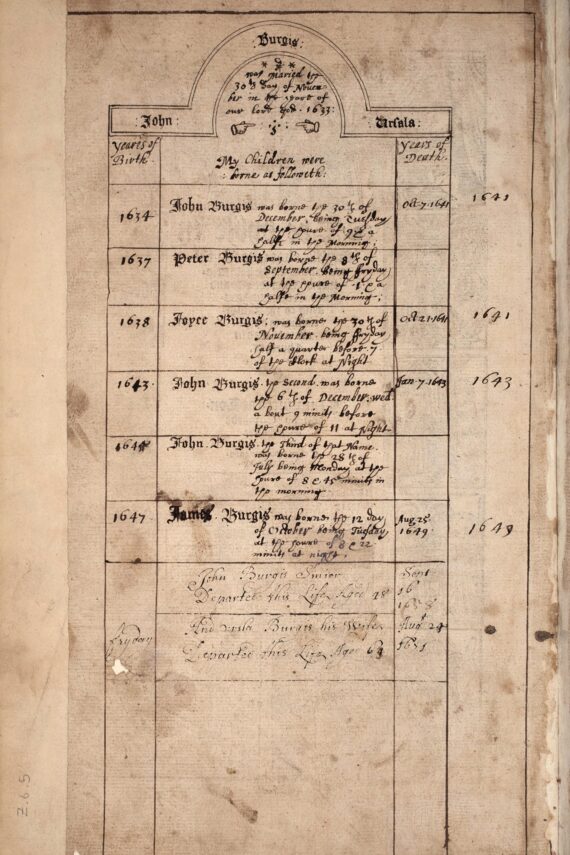
Figure 7: Records of Burgiss family births and deaths (Chetham’s Library, Z.6.5, n.p.).
The Taylor family Bible clearly also provided its owners with a handy writing—and drawing—surface. The chicken sketches look as if they may have been created by a parent and child: although some of the drawings were clearly made by a child, others look like the artist was a little more at ease using a quill and ink. This demonstrates the role that books could play in an early modern home even for those members of the household unable to engage with the biblical text. Drawings such as the Taylors’ chickens are not uncommon in books from this period: another example from Chetham’s Library’s collections depicts what appear to be several horses and a person on the final blank page of a work on church history that was printed in Paris in 1524 (Chetham’s Library, H.4.15), beneath longer notes by an adult concerning the contents of the book (figure 8). In a medical book in the collections (Chetham’s Library, Byrom 3.E.7.76), a reader with slightly more advanced drawing skills similarly seems to have copied the printer’s device from the title page, an eagle and two snakes (figure 9). Finally, a Bible that was printed in 1539 and donated to Chetham’s Library in 1870 as part of the Byrom collection features a number of children’s drawings of strange creatures, likely added to the book during the eighteenth century, long after it had been printed (figure 10).
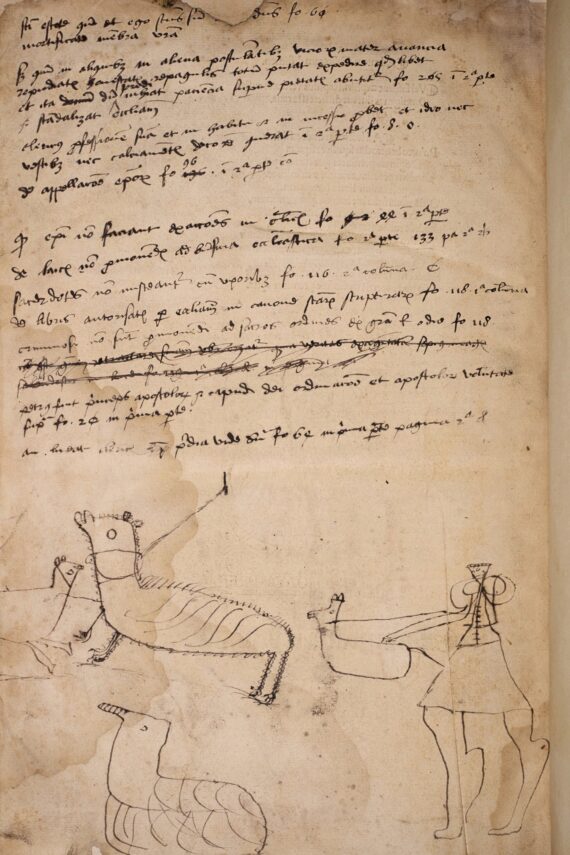
Figure 8: Drawing of horses and a person (Chetham’s Library, H.4.15, n.p.).
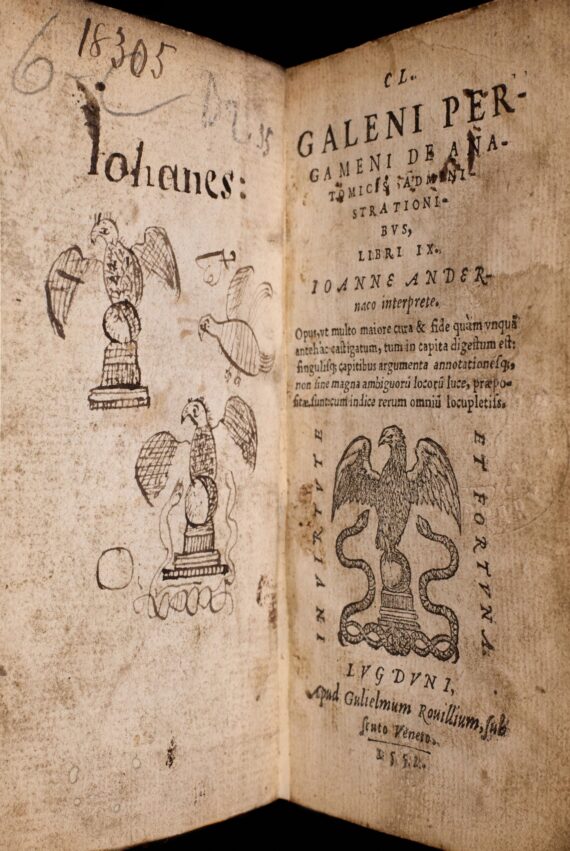
Figure 9: Drawing of a printer’s device (Chetham’s Library, Byrom 3.E.7.76, n.p.).
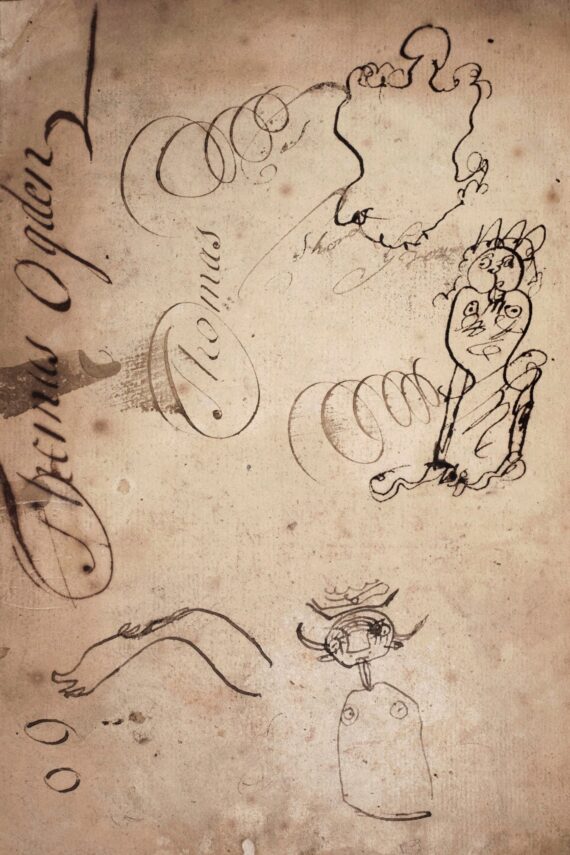
Figure 10: Drawings of strange creatures (Chetham’s Library, Byrom 2.K.5.57, n.p.).
Drawings such as these and books such as the Taylor family Bible provide us with a glimpse into the interactions between early modern book owners and their books. They present books as objects that were not just read, but that also provided space for records unrelated to the text and even for doodles, giving them an important place in the household. Surviving readers’ marks in books from this period provide invaluable evidence of the lives of readers in the distant past.
Blog post by Ellen Werner