- About
- Visiting
- What’s On
- Venue hire
- Catalogues
- Collections
- 101 Treasures of Chetham’s
- Digital Resources
- The Flowers of Histories
- A Book of Hours from France
- The Manchester Scrapbook
- Thomas Barritt of Manchester
- Art Treasures Examiner of 1857
- Manchester Association for Constitutional Order
- The North Western Museum of Science and Industry: Some Reminiscences by Richard Hills
- Criminal Manchester
- The Cup of Destiny
- Athenaeum Souvenir
- Middle English Manuscripts
- Manchester and Liverpool of Today
- Hollingworth’s Mancuniensis
- Memoir of Cecil Wray
- William Seward’s Diary
- The Anti-Monopolist
- Fishwick’s History of Rochdale
- Knyvett’s Defence of this Realm
- Tractatus de Nigromantia
- Axon Ballads
- Printed Books & Ephemera
- Archives & Manuscripts
- Prints and Photographs
- Blog
- Support us
The Mummified Cat in the Library Roof
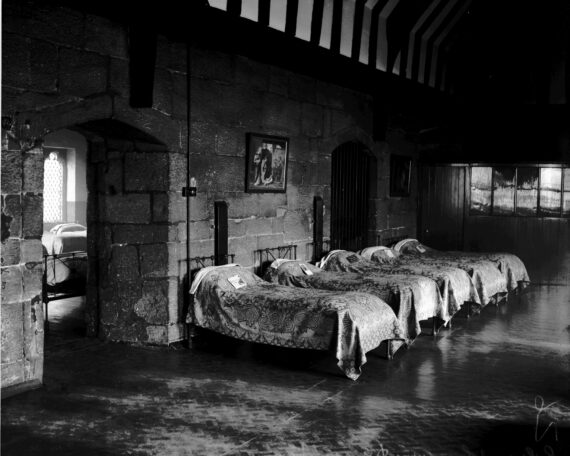
Readers are advised that this post contains a photograph of a mummified cat and rat which they may find distressing.
Over the years, the medieval buildings that now house Chetham’s Library and parts of Chetham’s School of Music have undergone numerous repairs and refurbishments, unearthing new discoveries. It was during renovations to the buildings during the late twentieth century that one of the more eccentric and—to some—spooky objects found to date was uncovered. While completing work on the school’s new library, which today occupies the space where the boys’ dormitories once stood during the days of Humphrey Chetham’s hospital school (a charitable school for boys from poor backgrounds), one of the workmen came across a mummified cat in the rafters! Looking into the folklore and spiritual beliefs of our predecessors can give us insight into why a cat was placed in the roof to begin with.
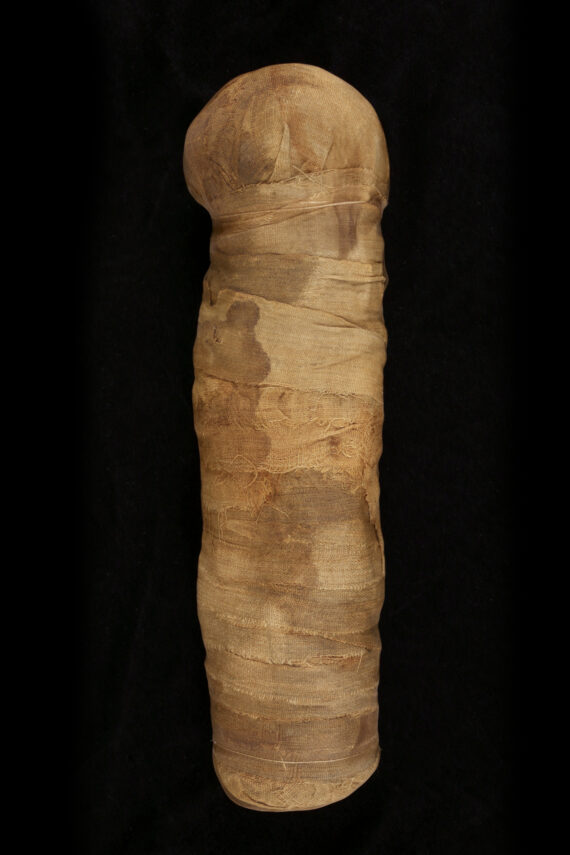
Figure 1: A mummified cat from Late Period ancient Egypt (Baltimore, Walters Art Museum, 79.2 (gift of the heirs of Mrs Frances Eaton Weld, 1947)).
In ancient Egypt, the birthplace of mummification, cats and various other animals were mummified for a number of purposes. One of these was so that they could be buried with their owners after death, an extension of owners’ love for their pets. Animals were also mummified as a sign of respect for the gods: many ancient Egyptian gods were depicted with the heads of animals, with the goddess Bastet commonly represented as a cat. Certain animals were therefore sacred through their association with the gods, rather than having a divinity of their own: ancient Egyptians did not worship every animal associated with an animal god, but mummified some of these animals as a sign of respect and devotion or as sacrifices to their respective gods. Some animals were mummified and placed alongside a mummified person as a source of food for their trip into the underworld, although we can rule out any cats being mummified for this reason. In the case of the first two reasons for mummification, the ancient Egyptians usually waited until the animal passed away naturally. However, a shipment of mummified cats that reached England in the nineteenth century revealed that some of these cats had had their necks broken, suggesting they were purposefully killed before being mummified in order to be sacrificed. In fact, cats were so often the subjects of mummification that a large number of them met their fate for the second time as fertilizer in England.
England’s relationship with mummified or dried cats goes much further back than their use as fertiliser, however. For centuries, people placed dead cats in the walls of houses and other buildings in England, which subsequently dried out and became mummified. In times of great superstition, such as the witch trials that occurred between the sixteenth and eighteenth centuries, some of the population looked to commonplace magic and apotropaic practices (practices thought to protect practitioners against evil) to ward off evil spirits that might threaten their homes and family. One such charm was placing a dried cat within the walls of your home, which would protect against pestilence and evil magic or spirits. Cats were popularly associated with witchcraft, most notably as witches’ familiars, and especially black cats, which have a reputation for being unlucky in certain European folklore. These discoveries of dried cats reveal that cats were also perceived to ward off black magic, perhaps tricking evil spirits that someone else had already infested this house. One piece of folklore claims that in the erection of a new building, the devil demanded that a sacrifice be provided lest tragedy befall the building later on. Dried cats may have been just the sacrifice that the devil was looking for.
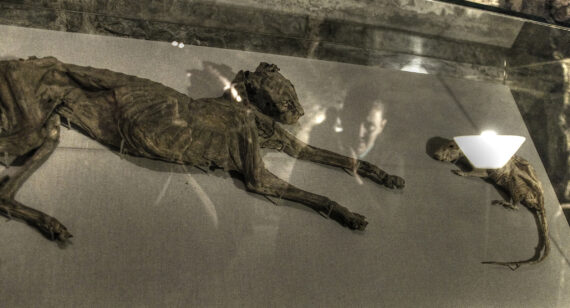
Figure 2: A mummified cat and rat that dropped from a pipe of an old organ during restoration, now displayed at Christ Church Cathedral, Dublin (photograph by Flickr user Psyberartist, licensed under CC by 2.0).
In a less spiritual sense, dried cats hidden within walls may reflect an effort by buildings’ inhabitants to protect against rodents and other pests. Many of the discovered dried cats are found—unfortunately for the builders discovering them—in intimidating postures, with their teeth bared and claws out. This suggests that these cats were placed within walls in something of a defensive position for the house, and were intended to scare away mice and rats, if not evil spirits. This may remind visitors to Chetham’s Library of our medieval cat flaps, and the important role cats have played in the buildings’ history, helping the fellows of Manchester’s collegiate church deal with rodent infestations in times of straw floors coverings and draughty corridors.
The positions of these cats suggest that they are unlikely to have become trapped in these cavities and subsequently mummified, since they must have been posed post-mortem, and that they died beforehand rather than being killed for this purpose like the mummified cats of ancient Egypt, since they show no signs of having had their necks broken. While some may believe that many of these dried cats are examples of unfortunate accidents, the stench of a decaying cat within a home would surely have driven the inhabitants to locate and get rid of it. Although the ancient Egyptians did not record their methods of mummification, it is known that animals prepared for mummification would be anointed with cedar oil and strong, pleasant-smelling herbs to mask their smell. We can presume that a similar process was used by our superstitious ancestors for their protective dead cats
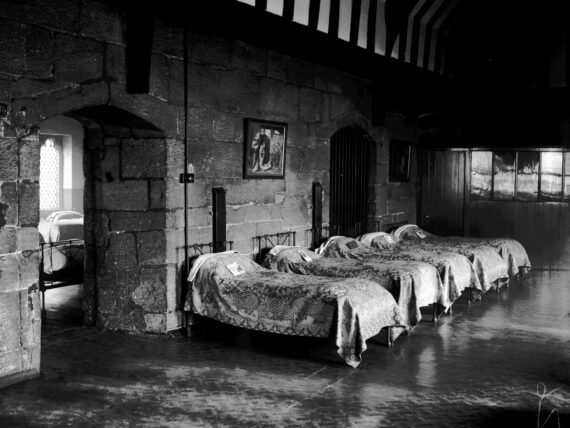
Figure 3: The old hospital school dormitories, where the mummified cat was discovered.
According to the scholar Brian Hoggard’s study of the archaeology of counter-witchcraft and popular magic, ‘only 139 documented cases of dried cats have been reported for England. Of these only sixteen (12 per cent) are pre-1700, seventeen (12 per cent) are post-1700, and the remainder of 106 (76 per cent) could not be dated’. This makes it hard for us to say when exactly our mummified cat was placed within the rafters, although it is unlikely that it would have survived the damage inflicted to the medieval buildings in the early to mid-seventeenth century during the English Civil War (which notably included damage to the roof). One could imagine that a superstitious builder placed it there during refurbishment works afterwards, or that a student or teacher placed it there during the years of the hospital school; it is hard to decipher whether this mummified moggy has been protecting the students for one hundred years or three hundred years.
The unfortunate builder’s discovery of a mummified cat in the library roof may have come as a shock, but their discovery sheds light on England’s own relationship to spirituality and the legacy of ancient Egyptian post-mortem practices. Much to his credit, the cat remained within the rafters, preserving important historical information, and the new library was completed. Hopefully, the mummified cat in the roof will continue to shield students from evil spirits while they study for their exams for many years to come!
Blog post by Georgia Hathaway

1 Comment
Lynn
Re dried or mummified cats found in old buildings. I would think most go unreported. We discovered one hidden in the clunch wall of the inglenook fireplace. It had been laid on a bed of straw.