- About
- Visiting
- What’s On
- Venue hire
- Catalogues
- Collections
- 101 Treasures of Chetham’s
- Digital Resources
- The Flowers of Histories
- A Book of Hours from France
- The Manchester Scrapbook
- Thomas Barritt of Manchester
- Art Treasures Examiner of 1857
- Manchester Association for Constitutional Order
- The North Western Museum of Science and Industry: Some Reminiscences by Richard Hills
- Criminal Manchester
- The Cup of Destiny
- Athenaeum Souvenir
- Middle English Manuscripts
- Manchester and Liverpool of Today
- Hollingworth’s Mancuniensis
- Memoir of Cecil Wray
- William Seward’s Diary
- The Anti-Monopolist
- Fishwick’s History of Rochdale
- Knyvett’s Defence of this Realm
- Tractatus de Nigromantia
- Axon Ballads
- Printed Books & Ephemera
- Archives & Manuscripts
- Prints and Photographs
- Blog
- Support us
‘A Sweetness … Which Tickles Even While it Hurts’: Absalom and Achitophel (1681) by John Dryden, a Seventeenth-Century Political Satire
Chetham’s Library was established well over two centuries before English Literature was considered a subject worthy of academic study. Initial book purchases concentrated on works of theology, Classics and history, law, science and medicine, but the library’s later acquisitions of poetry, novels and plays written in English were (and still are) impressive. Important works of seventeenth-century literature held by the library include Shakespeare’s Third Folio (1664), the subject of recent blog posts, and first editions of the Poems of John Donne (1633) and Milton’s Paradise Lost (1667), both described in the 101 Treasures section of Chetham’s Library’s website. A further literary masterpiece from the seventeenth century is a first edition of the satirical poem Absalom and Achitophel (1681) by John Dryden, England’s first official Poet Laureate.
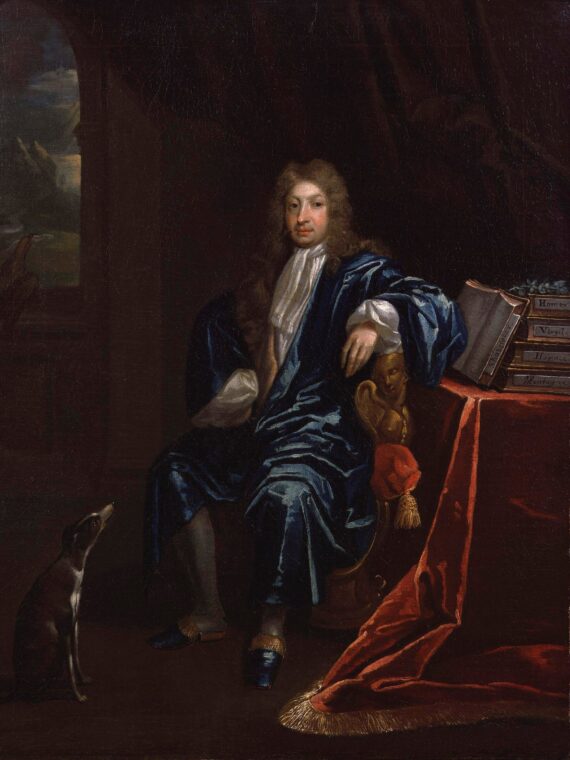
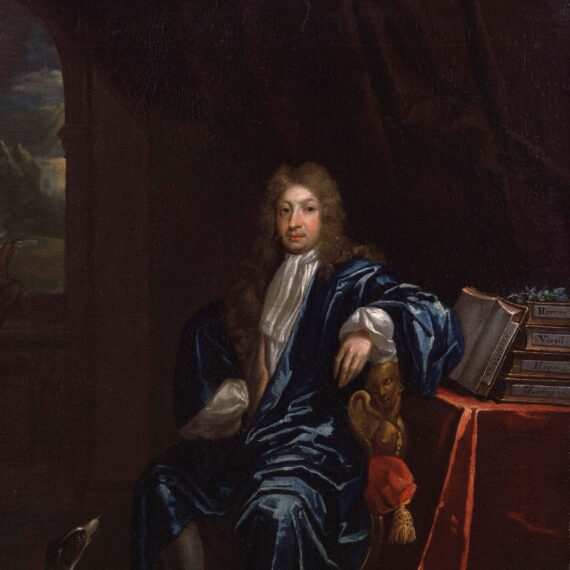
Figure 1: Portrait of John Dryden (1631–1700) by James Maubert (National Portrait Gallery, NPG 1133) (Wikimedia Commons)
As well as being a poet, Dryden was a prolific playwright, translator, librettist and literary theorist, and the dominant literary figure during the reign of Charles II. It was one of the key events of Charles’s reign that Dryden’s most famous poem dealt with, the Exclusion Crisis of 1679–81. Charles, married to Catherine of Braganza, had no legitimate child but several illegitimate offspring. His heir presumptive was his brother James, Duke of York and later James II, who had converted to Catholicism, causing much concern about the consequences of a Catholic succession. Anti-Catholic feeling had been exacerbated by the wholly fictitious Popish Plot in 1678, whereby Catholics were rumoured to be about to rise up and slaughter Protestants. In the national panic that followed, the Earl of Shaftesbury introduced into Parliament an Exclusion Bill by which the Duke of York would be debarred from the succession. Instead, Shaftesbury and his supporters wanted Charles’s favourite illegitimate son, the Protestant Duke of Monmouth, to be recognised as the legitimate heir to the throne. To prevent the Exclusion Bill from becoming law, Charles dissolved parliament and did not recall it after 1681. Dryden’s focus as he wrote Absalom and Achitophel in 1680-81 was on Shaftesbury’s machinations to exclude the Duke of York from the succession. The poem has been described as ‘a direct intervention into public debate, intended to change the nation’s future … [with] no counterpart in English poetry before or since’.
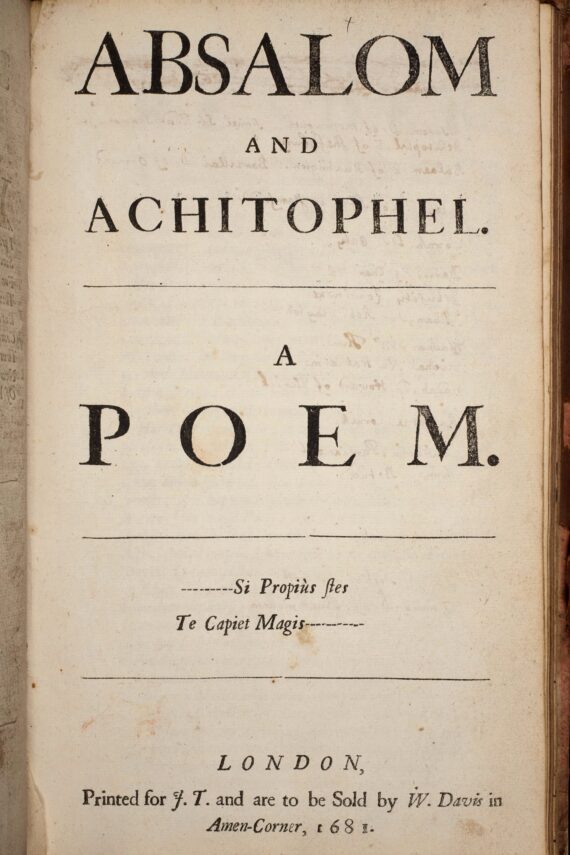
Figure 2: The title page of John Dryden’s Absalom and Achitophel (Chetham’s Library, 8.A.8.43(3))
The poem is highly satirical, and none of the real-life characters in the poem escape Dryden’s criticism of them. He is amusing on the subject of Charles’s promiscuity and Monmouth’s gullibility and vanity. A more vicious wit enters the poem when portraying Shaftesbury and his supporters. Contemporaries featured in the poem include the queen, the Duke of Buckingham and Titus Oates, an anti-Catholic scaremonger and the originator of the Popish Plot. Dryden, however, did not explicitly name any of the personages involved. Instead, he substituted events, locations and characters from the Old Testament, specifically the Second Book of Samuel. The story of Absalom, the beautiful and much-loved son of King David who, encouraged by Achitophel, rebelled against his father, provided an equivalence for contemporary events. Part of the fascination of the poem for its first readers was the challenge of working out which biblical character corresponded to which public figure.
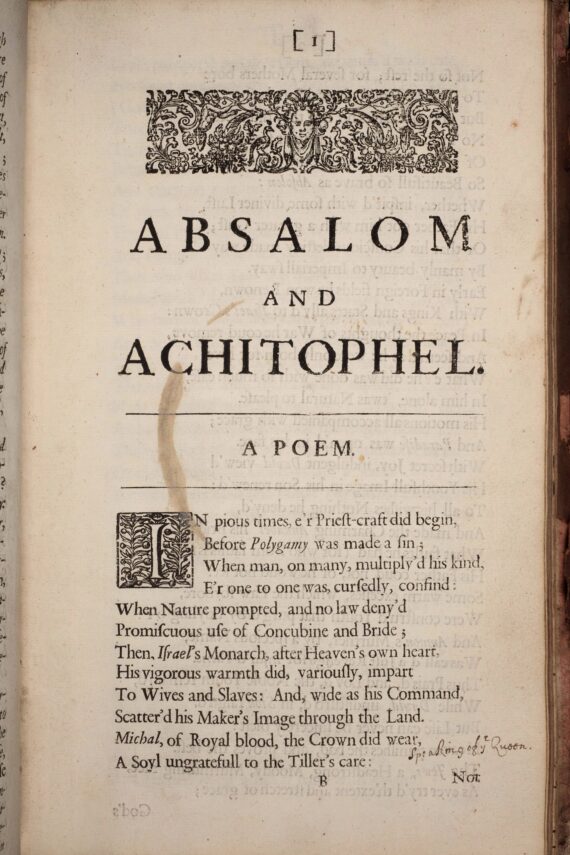
Figure 3: The opening lines of John Dryden’s Absalom and Achitophel (Chetham’s Library, 8.A.8.43(3), p.1).
A further attraction of the poem is Dryden’s wit. The heroic couplets in which it is written express ridicule and condemnation of Charles’s enemies, but also deal with the king himself with an air of amused critical detachment. On the subject of Charles’s many mistresses and bastard children, Dryden assumed an ironically admiring tone, referencing the biblical idea that man was made in God’s image:
‘Then, Israel’s Monarch, after Heaven’s own heart,
His vigorous warmth did, variously, impart
To Wives and Slaves: And wide as his Command,
Scatter’s his Maker’s Image through the Land’
Although not uncritical of Charles II, Dryden was firmly on the side of the monarch and his brother. In his preface to the poem he justified his satirical method, arguing that the wit of the poem may win over readers to his viewpoint: ‘For there’s a sweetness in good Verse, which Tickles even while it Hurts: …The Commendation of Adversaries, is the greatest Triumph of a Writer.’ This was perhaps an optimistic view, given the viciousness with which Dryden treated Shaftesbury and his allies. Buckingham was characterised as a deeply unstable ‘blest Madman’, ‘States-Man and Buffoon’. Oates was treated with sarcasm:
‘Sunk were his Eyes, his Voyce was harsh and loud,
Sure signs he neither Cholerick was, nor Proud’
In a Spectator essay of 1712, Joseph Addison described Absalom and Achitophel as ‘one of the most popular Poems that ever appeared in English’. Its appeal, he argued, was due to the challenge it presented to the reader, who must identify the various characters to work out its true import. The reader’s mind is pleasurably engaged in decoding the text, giving ‘the Reader an opportunity of exerting his own talents’. An early reader of Chetham’s Library’s copy of the poem may provide evidence for the truth of Addison’s supposition. There is a key to the characters handwritten on the verso of the title page, with the biblical characters arranged in alphabetical order, which may indicate that it is a transcription of one of the printed keys that appeared shortly after the poem’s publication. Such annotation is not unusual: the Dryden scholar Alan Roper examined 149 copies of Absalom and Achitophel from 1681 and 1682, and found that 67 contain manuscript keys or marginalia (or both). The key in Chetham’s Library’s copy reads thus:
Absalom, D. of Monmouth. Amiel, Sir Edwd Seamor, Snr.
Achitophel, E. of Shaftesbury.
Balaam, E. of Huntington. Barzillai, D. of Ormond.
Caleb, E. of Kent or Stamford.
Corah, Dr. Oates.
David, Kg. Char. 2d.
Jesubites, Londinors.
Ishban, Sir Rob. Clayton.
Issachar, Mr Thin.
Michal, Qn Katharine
Nadab, Ld Howard of Escrick.
Rabsheka, Cornish.
Sanedrin, Parliament.
Shimei, Bethel.
Zadock, Archbp Sancroft.
Zimri, D. of Buckingham.
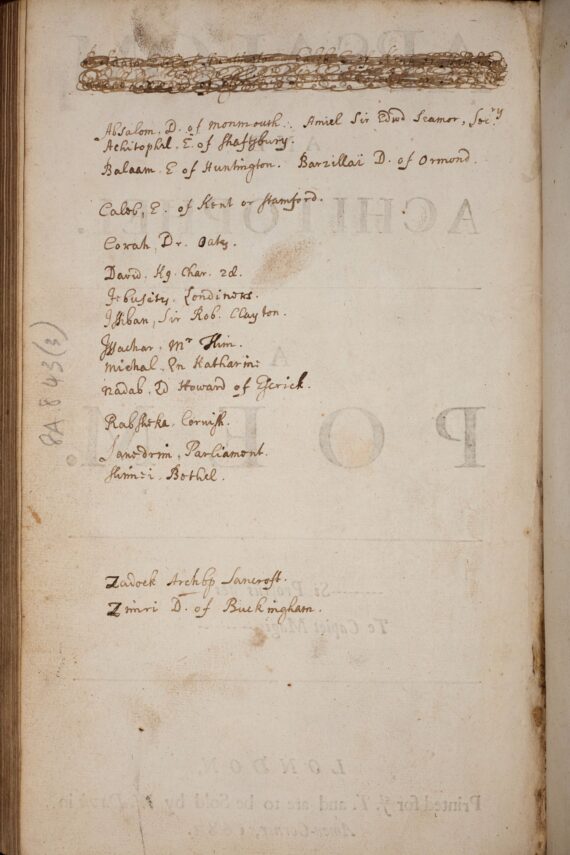
Figure 4: A handwritten key to the characters in John Dryden’s Absalom and Achitophel (Chetham’s Library, 8.A.8.43(3), verso of title page).
Brief marginalia occur within the text. Dryden’s reference to Catherine of Braganza’s infertility (‘Michal, of Royal blood, the Crown did Wear/ A Soyl ungratefull to the Tiller’s care’), was annotated ‘Speaking of ye Queen’. The line first mentioning Zimri was annotated ‘D. Buckingham’, although an attempt was made to erase this. When David (i.e. Charles II) refers to his son Absalom as ‘my Young Samson’, the phrase was glossed as ‘D. of Monmouth.’ The identifications of the main characters are standard, although some minor characters’ identifications are disputed. The annotator allowed for two possibilities for the identity of Caleb, and also included two characters (Ishban and Rabsheka) that do not appear in Dryden’s Absalom and Achitophel. Such was the popularity of the poem on its publication that there was demand for a sequel, The Second Part of Absalom and Achitophel (1682), in which these characters appear. The Second Part was mainly the work of Nahum Tate, although Dryden contributed character assassinations of two rival poets: Elkanah Settle and Thomas Shadwell appear as Doeg as Og, ‘Two Fools that Crutch their Feeble sense on Verse’.
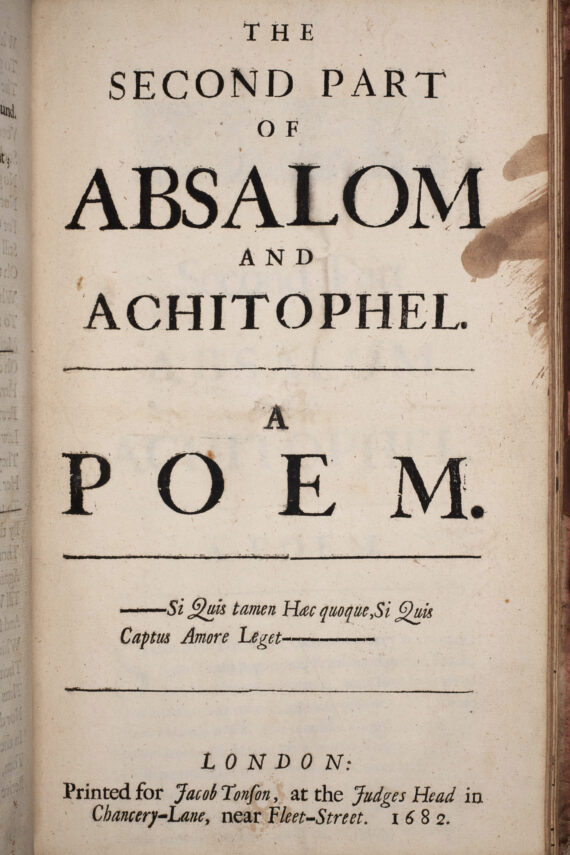
Figure 5: The title page of Nahum Tate and John Dryden’s The Second Part of Absalom and Achitophel (Chetham’s Library, 8.A.8.43(3b)).
The volume into which Chetham’s Library’s copy of Absalom and Achitophel is bound contains multiple texts, all from the Restoration period. The book opens with four plays by the Earl of Orrery: The History of Henry V and The Tragedy of Mustapha, printed together and dated 1677, and The Black Prince and Tryphon: A Tragedy, printed together and dated 1672. These are followed by Absalom and Achitophel and The Second Part of Absalom and Achitophel. The seventh and final work in the volume is a pamphlet entitled A Gentle Reflection on the Modest Account and a Vindication of the Loyal Abhorrers from the Calumnies of a Factious Pen, by the Author of the Parallel (1682). The compiler of the volume did not choose these works simply because they were written in the same period. In 1664, Dryden had dedicated his play The Rival Ladies to the Earl of Orrery, and in doing so, praised Orrery’s unusual use of rhyming couplets in tragic drama, a verse form that Dryden also used in this genre. The pamphlet is closely linked to the two Absalom and Achitophel poems, since it also deals with the Exclusion Crisis and supports Charles II against Monmouth and Shaftesbury (the ‘Loyal Abhorrors’ were those who opposed the ‘Petitioners’ who wished Parliament to sit in order to pass the Exclusion Bill).
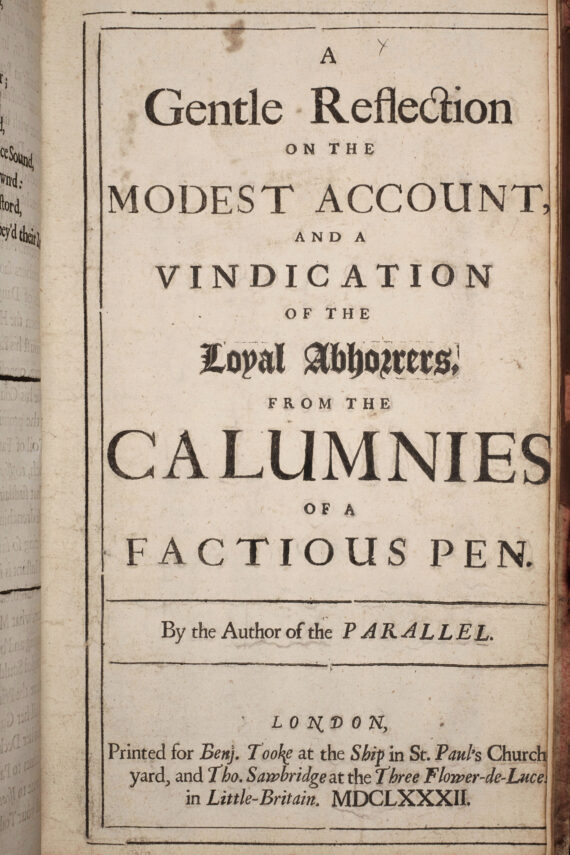
Figure 6: The title page of John Northleigh’s A Gentle Reflection … By the Author of the Parallel (Chetham’s Library, 8.A.8.43(4)).
The volume bears the bookplate of Robert Myddleton Esq. of Gwaynynog, the estate of a prominent Denbighshire family. Almost a century after the poem’s publication, Gwaynynog was visited by Dr Johnson on his travels in Wales in 1774. His host was Colonel John Myddleton, whom Johnson described as ‘the only man in Wales who talks to me of literature’. If they discussed Myddleton’s copy of Absalom and Achitophel, Johnson would have expressed enthusiasm. In his Life of Dryden (1779), he disagreed with Addison that the main appeal of the poem was its being a poème à clef. He instead paid tribute both to its literary qualities and to the political punch it packs: ‘there is no need to enquire why those verses were read, which to all the attractions of wit, elegance, and harmony, added the co-operation of all the factious passions and filled every mind with triumph or resentment’. Johnson’s point was that the appeal of the poem does not rely purely on the reader’s curiosity about who is who. He argues in favour of other qualities of the poem: Dryden’s linguistic stylishness, and the poem’s ability to arouse strong feelings in its readers. Whether they felt ‘triumph’ or ‘resentment’ depended on whether they sided with Charles or with Shaftesbury’s faction, with monarchical power or parliamentary rights. The formation of two opposing sides in the Exclusion Crisis is often seen as a defining moment in English political history, since the two sides became the first recognisable political parties: the Tories, traditionally supporting the monarchy, and the Whigs, in favour of the supreme power of parliament. Dryden’s topical satire in effect witnesses the origins of the two-party system.
Blog post by John Cleary