- About
- Visiting
- What’s On
- Venue hire
- Catalogues
- Collections
- 101 Treasures of Chetham’s
- Digital Resources
- The Flowers of Histories
- A Book of Hours from France
- The Manchester Scrapbook
- Thomas Barritt of Manchester
- Art Treasures Examiner of 1857
- Manchester Association for Constitutional Order
- The North Western Museum of Science and Industry: Some Reminiscences by Richard Hills
- Criminal Manchester
- The Cup of Destiny
- Athenaeum Souvenir
- Middle English Manuscripts
- Manchester and Liverpool of Today
- Hollingworth’s Mancuniensis
- Memoir of Cecil Wray
- William Seward’s Diary
- The Anti-Monopolist
- Fishwick’s History of Rochdale
- Knyvett’s Defence of this Realm
- Tractatus de Nigromantia
- Axon Ballads
- Printed Books & Ephemera
- Archives & Manuscripts
- Prints and Photographs
- Blog
- Support us
Binding Books for Chetham’s Library
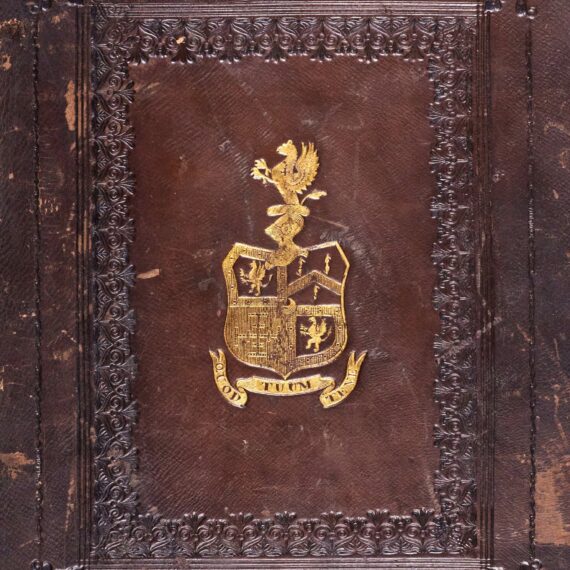
Visitors to the library often ask whether our books are in their original bindings, or whether they have been bound or rebound since they arrived in our collection. Although the invoices spanning the first thirty years of the library’s existence (1655–85) are tantalisingly scant in detail, they reveal that books delivered in that period were purchased predominantly in London through the second-hand bookseller and publisher Robert Littlebury. Thus, most books would have arrived at the library in their original bindings. Occasionally, the library purchased recent books, which were supplied to Littlebury in sheets. However, he ensured that these were bound in London before they were dispatched to the library. Records suggest that the trustees prized a secure binding over decorous ostentation when it came to the binding of new books, suggesting a desire to spend the founder’s money wisely rather than squander it on expensive gilt finishing, in keeping with Humphrey Chetham’s motto, ‘quod tuum tene’ (‘hold on to what is yours’). At around this date on the continent, writers on the public scholarly library such as Gabriel Naudé, Hermann Conring and Johann Heinrich Hottinger were similarly arguing that funds were better spend on the purchase of more books rather than exquisite bindings.
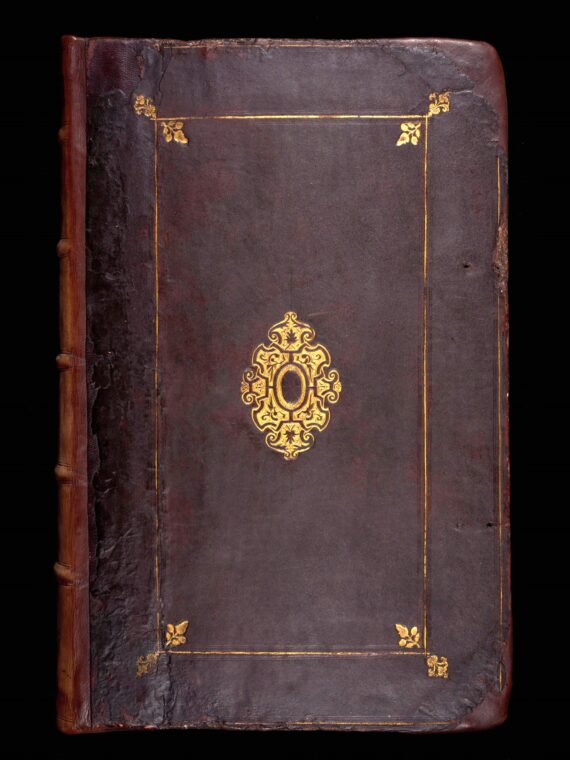
Figure 1: The binding of Chetham’s Library’s copy of the London Polyglot Bible (Chetham’s Library, B.6.41)
Nevertheless, records indicate that a London binder received a payment of £4 in 1660 for the ‘extraordinary binding’ of the London Polyglot Bible. A polyglot Bible is one written in multiple languages, often presented in parallel columns; the languages used in this Bible were Latin, Arabic, Aramaic, Ethiopic, Greek, Hebrew, Persian and Syriac. Printed in London between 1654 and 1657 and comprising six volumes, this highly respected edition of the Bible is also known as the Walton Polyglot in honour of Brian Walton, bishop of Chester (1660–61), who created it in collaboration with a team of distinguished biblical and linguistic scholars. Chetham’s Library’s copy of the London Polyglot Bible has a contemporary English full calf binding, gilt-tooled to a rectangular panel design. The design consists of a panel with single fillet edges, an acorn stamp at each inner corner, and a floral stamp at each outer corner. There is an entrelac (interlace pattern) centrepiece with single fillet borders. A single gilt fillet also decorates the edges of boards. The term ‘fillet’ describes both the line patterning and the wheel-like tool used to create these patterns. This Bible was purchased in 1660, during the period when Chetham’s was still a chained library (between 1655 and the 1740s). Accordingly, two chain-staple marks are noticeable on the upper board where one end of the chain was attached to the book (the other end was attached to a metal rod that ran the length of the bookshelf).
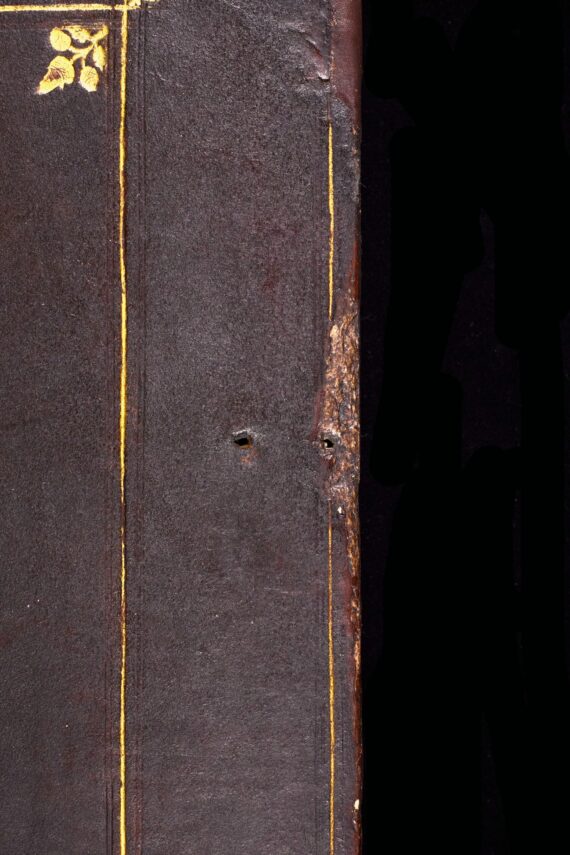
Figure 2: Traces of chaining in Chetham’s Library’s copy of the London Polyglot Bible (Chetham’s Library, B.6.41)
During the library’s early decades, books were occasionally sourced locally though the Manchester-based bookseller and binder Mordecai Moxon but records suggest that he was not responsible for any of the early bindings. The use of local binderies emerged in the eighteenth century and proliferated in the nineteenth. Indeed, different volumes of the London Polyglot Bible were re-backed over the years by local binders: Thomas Carter (active 1740–1804) worked on volumes two to five (the nature of the work is unclear) and Charles Winstanley (active 1883–91) re-bound volumes one and six.
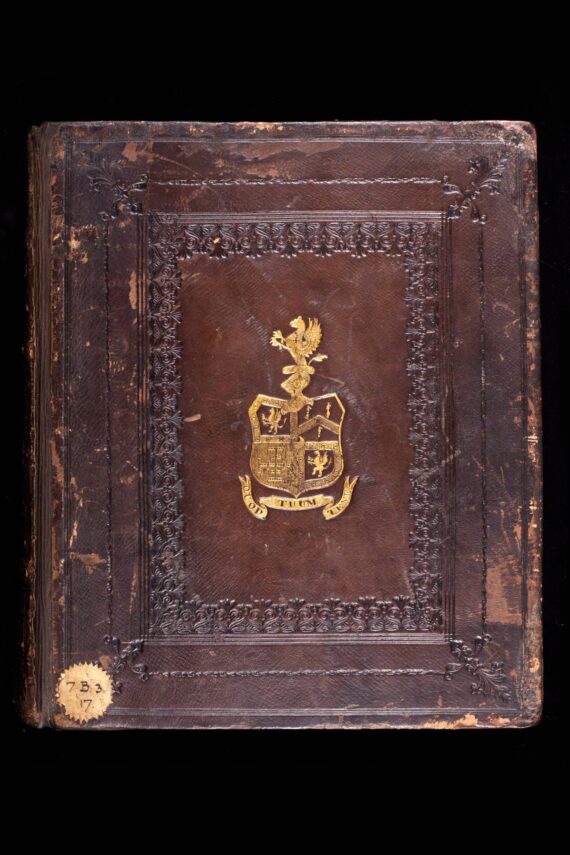
Figure 3: The binding of Chetham’s Library’s copy of the Coverdale Bible (Chetham’s Library, Mun. 7.B.3.17)
Another local bookbinder, Frederick Wilde (active 1832–38), re-bound the copy of the Coverdale Bible in the library’s collection. Initially published in 1535, this was the first version of the Bible to be fully translated into Modern English by the English reformer Myles Coverdale (c. 1488–1569). Sadly, our modern concern with conserving original bindings was not shared by our predecessors. The nineteenth century especially has been described as ‘a cruel period for historic bindings’. The library’s records shed no light on how the Coverdale Bible was bound before Wilde was tasked with re-binding it. What is known is that Wilde bound it in a full calf binding embellished with a rectangular panel design, a triple fillet outer border and a floral stamp at each corner. He incorporated his own name, ‘Wilde’, into the outer rectangle cable bordering that connects the four floral-tooled corners. The floral corners also connect with the inner rectangle, which has a triple fillet border with decorative floral roll-tooled pattern on the inside. The binder’s ticket on the inside of the upper board reads ‘WILDE. BOOKBINDER. MANCHESTER’.
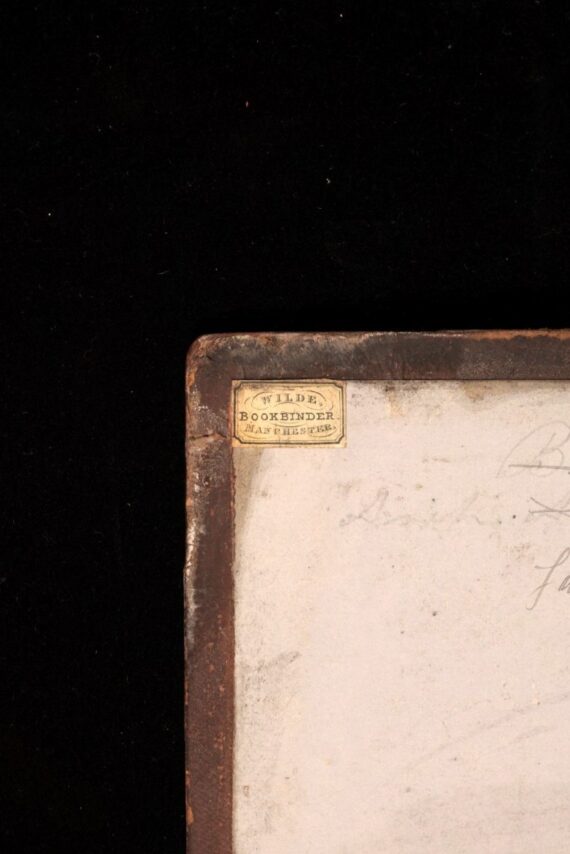
Figure 4: The binder’s ticket in Chetham’s Library’s copy of the Coverdale Bible (Chetham’s Library, Mun. 7.B.3.17)
What makes the binding of Chetham’s Library’s copy of the Coverdale Bible unique is the prominent inclusion of a gilt-tooled griffin, Humphrey Chetham’s armorial stamp. This symbol also appears on the spines of many bindings commissioned locally by the library—and once a visitor discovers one, they are compelled to search for more and are never disappointed—but sadly, there is very little information about when this practice began or when the different variants of the griffin motif (there are at least eight) were used.
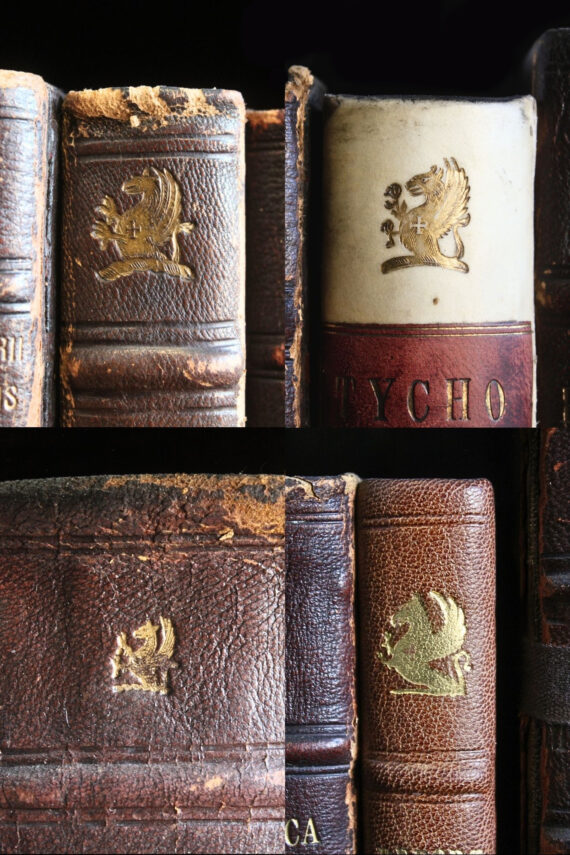
Figure 5: Various griffin stamps on the spines of books in Chetham’s Library
By the turn of the nineteenth century, Chetham’s Library had established an in-house bindery, with an assistant librarian whose sole responsibility was bookbinding. Given the particular skills and expertise involved in bookbinding, it is not surprising that the quality and scope of the work carried out by assistants untutored in the craft did not meet expectations. The archives suggest that the fruits of the in-house bindery amounted to repair work rather than carrying out ‘first bindings’. In 1834, the library employed John Sheldmerdine as assistant librarian on the grounds that he possessed the requisite bookbinding skills. However, he was dismissed from his post in 1845 when the Library Committee discovered that he had mutilated a fourteenth-century missal (a liturgical book containing readings for masses). He was charged with theft when booksellers in Shudehill in Manchester identified his wife as being responsible for selling not only fragments of the missal to local booksellers, but also other library material.
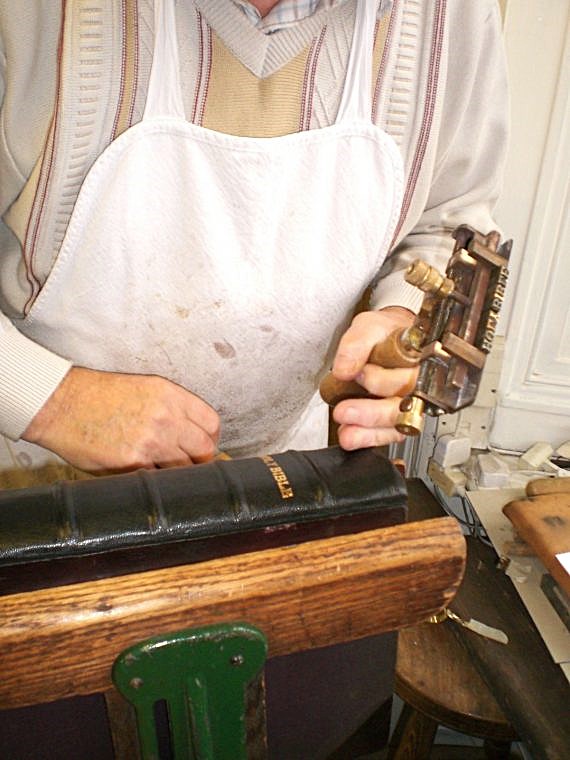
Figure 6: Cyril Formby rebinding one of the library’s books
By the 1860s and 1870s, the library was increasingly reliant on local professional binders such as William Boddington, W. H. Woods & Company, Bramhall & Menzies, and Charles Winstanley. However, none of the binding work carried out either in-house or off-site during the nineteenth and early twentieth centuries is of remarkable quality. Rather than attempting to conserve original bindings, books and manuscripts were often completely rebound. On the whole, gilt tooling was kept to a minimum, and cheap leathers and even cloth were used to re-bind valuable early modern books. Moreover, several books were cropped in the course of re-binding, leading to the loss of valuable marginal annotations.
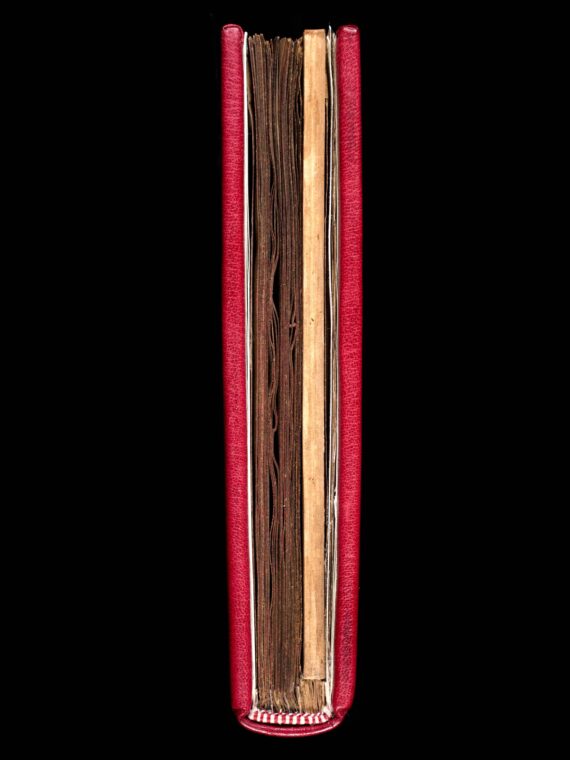
Figure 7: The astrological manuscript rebound by Mark Furness, featuring an insert to protect its volvelles (Chetham’s Library, Mun. A.4.99).
In more recent decades, the library has taken on the conservation challenge inherited from this era. This task has been tackled for the most part by local bookbinders including Mike Duckworth, Mark Harrison and Cyril Formby, who have been responsible for some of the most beautiful bindings that can be seen on the library’s shelves today. Notable examples include a twelve-volume set of Pliny the Elder’s Naturalis historia with a facing French translation, re-bound by Cyril Formby (visible in Press O), and a collection of Greek Orthodox books, re-bound by Mark Harrison following a donation by Manchester’s Greek community (visible in Press I). Most recently, Mark Furness, senior conservator at the John Rylands Library, took on the challenge of re-binding a fifteenth-century astrological manuscript that was in poor condition following its re-binding in the nineteenth century. This sort of interventive conservation is often prohibitively expensive, and is usually made possible through generous donations to the library. Despite these challenges, however, the bindings that adorn the library shelves not only captivate the curiosity of staff and visitors alike; they reflect the rich and varied history of bookbinding at Chetham’s library, worth celebrating in its own right.
Blog post by Brigid Corrigan