- About
- Visiting
- What’s On
- Venue hire
- Catalogues
- Collections
- 101 Treasures of Chetham’s
- Digital Resources
- The Flowers of Histories
- A Book of Hours from France
- The Manchester Scrapbook
- Thomas Barritt of Manchester
- Art Treasures Examiner of 1857
- Manchester Association for Constitutional Order
- The North Western Museum of Science and Industry: Some Reminiscences by Richard Hills
- Criminal Manchester
- The Cup of Destiny
- Athenaeum Souvenir
- Middle English Manuscripts
- Manchester and Liverpool of Today
- Hollingworth’s Mancuniensis
- Memoir of Cecil Wray
- William Seward’s Diary
- The Anti-Monopolist
- Fishwick’s History of Rochdale
- Knyvett’s Defence of this Realm
- Tractatus de Nigromantia
- Axon Ballads
- Printed Books & Ephemera
- Archives & Manuscripts
- Prints and Photographs
- Blog
- Support us
Unbound
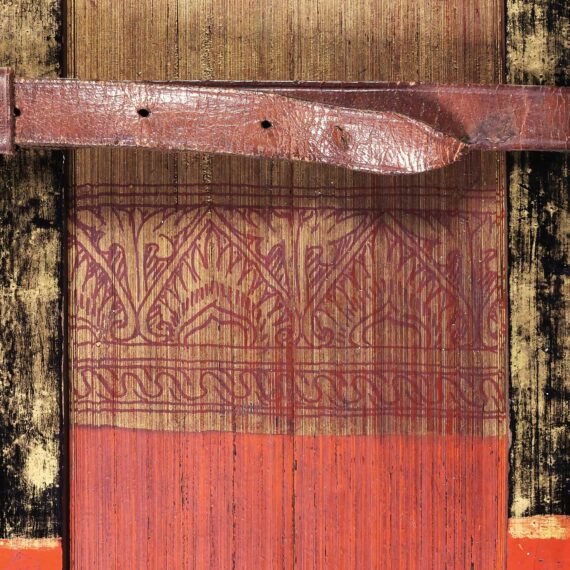
Everyone is familiar with the old adage that one shouldn’t judge a book by its cover, but adhering to the most literal sense of that saying is sometimes more easily said than done. The covers of books protect the vulnerable text-blocks that they enclose, but they often go beyond this functional purpose and present elaborate decoration and other information that can tell us a great deal about how we ought to read them and interpret their stories. The covers of Victorian novels sought to tempt readers with bright colours and striking illustrations, for example, while the bindings of medieval and early modern books can reveal when, where and for who they were bound. Sometimes, it’s not even possible to avoid judging books by their covers, as most visitors to Chetham’s Library invariably discover: with the exception of the very small number of books that we’re able to display as part of our exhibitions and during events, the covers and spines of the books are often the only parts of them that are visible, and so form the only basis for judging their contents!
Chetham’s Library’s latest exhibition focuses on the wide variety of bindings that can be found on the books in our collections and what they can tell us. Some of our most luxurious bindings reflect the rich tastes of kings and queens, while more utilitarian bindings attest to the pragmatic attitudes of everyday professionals such as practicing physicians. The materials of these bindings encompass leather, parchment, paper, fabric and wood, and their condition ranges from well-preserved to worn and damaged to repaired or completely re-bound. Often, books’ spines provide some information about what they contain, such as a title, author’s name or publication date, but always, far more remains unseen than seen. Over the coming months, we look forward to exploring some of the stories behind these bindings and the contents of the books that they protect and adorn with you.
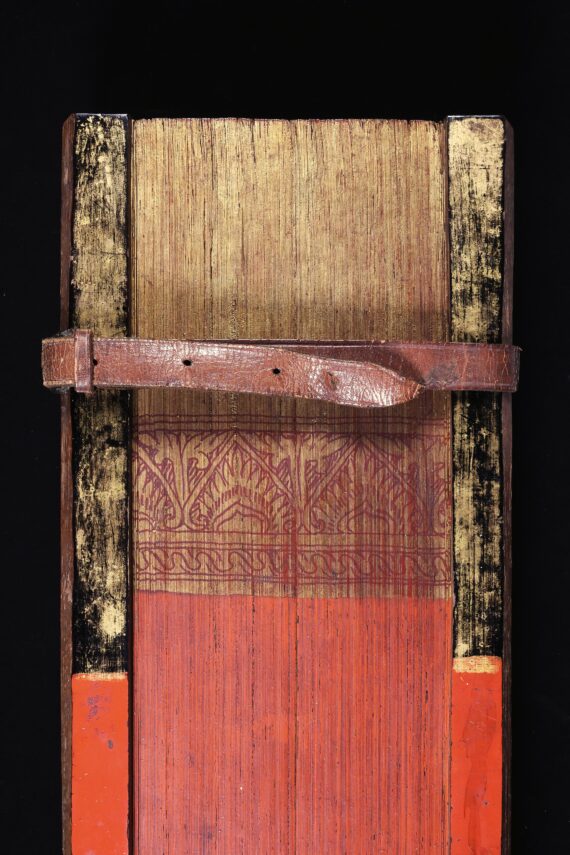
Figure 1: The fore-edge of a Burmese palm-leaf manuscript (Chetham’s Library, MS D.7).